
Blake Babies History Part 4

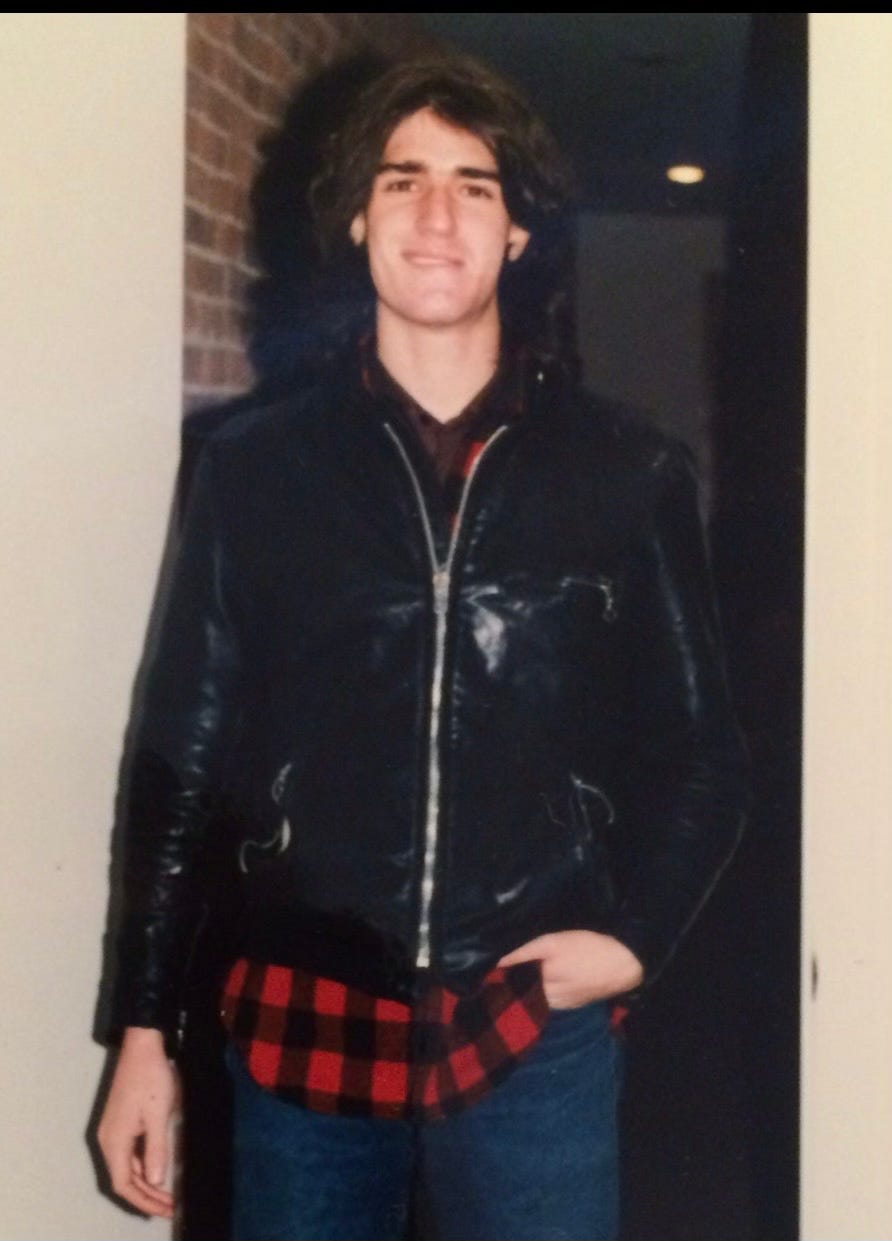
Note: I’ve been working on a new music business piece that I’ll publish next week - my week has been very demanding with work, our daughter graduating high school, and visiting family. In the meantime, I’m publishing ONE MORE free chapter to my Blake Babies memoir - in which we’re finally getting the band up and running. Lots more to follow!
CHAPTER 4
In some ways Juliana was just like us—her musical taste, ambition, and desire to change her life and have an impact on music culture. In other ways we were wildly different. Freda and I grew up free-range in a college town, exploring everything a local music scene had to offer. Juliana grew up isolated, rejecting the party-down culture of her affluent suburban South Shore community of Duxbury, as evidenced in her early songs such as Swill and the Cocaine Sluts and AKA Deluxebury.
Juliana was extremely private and deeply shy. She felt strong contempt for people who partied and had casual sex—a judgmental, oddly Puritan worldview. Freda and I came from a hedonistic culture without many rules or boundaries. These inherent differences led to all sorts of conflicts right from the start. Nevertheless, in the early days, we were all friends and grateful to have found each other.
Freda extended her chaotic lost weekend when she arrived in Boston, drinking heavily and causing all sorts of chaos—and grief for me. I more or less moved into The Radiator as it became a nightly party house for the freakiest Berklee students. When Anne and Tom got together, Tom moved in as well. Nobody had any privacy. Tensions naturally followed.
Just as soon as we had our core lineup for Blake Babies, I had a breakdown of sorts, and I hastily decided to bail for the summer and get a handle on myself and my future. I’d become distracted from school and emotionally spent after yet another breakup with Freda—one that felt like a final breaking point.
I spent the summer of 1986 working long shifts in a grim job at a medical supply factory, alternately daydreaming about my future with the band and stressing about my return to Boston. I further complicated things by meeting someone new in Indiana, which made me consider bailing on Boston completely.
Freda was persuasive and apologetic, however, and she gradually convinced me to make amends and return to Berklee. The promise of Blake Babies was too compelling, everything I’d worked for. Unable or perhaps unwilling to break our old co-dependent patterns, we went right back to our cycle of getting back together, breaking up again, and causing chaos everywhere we went.
Juliana’s mother purchased a renovated condominium on Symphony Road as an investment, and we became her tenants. The flat was a ten-minute walk to Berklee, close to Northeastern University and the Christian Science Center. We dubbed the place the “condo pad.” It was a beautiful third-floor walkup with a big bay window in the front room and two bedrooms—a small room Juliana claimed and a larger room that Freda and I shared. I loved the exposed brick and polished wood. We were still feral, however—we quickly filled the place with found furniture, heaps of dirty laundry, and piles of unwashed dishes and food containers in the kitchen.
We felt we needed a fourth member to complete the Blake Babies lineup. Juliana owned an electric guitar and amp, but she still learning to play the electric guitar. With the simple backbone of Freda’s rock-solid but bare-bones drumming and Juliana’s basic rhythm guitar, we needed my guitar to orchestrate the sound and define the arrangements. That meant we needed to find a bassist. We also needed a fourth roommate at the Condo Pad to be able to afford the place. Freda suggested we call our friend Seth in Bloomington from Medium Cool to see if he’d come to Boston and join our band and be our roommate.
I can’t remember Seth’s exact circumstances. I think he dropped out of IU after a year like so many faculty kids who grew up in Bloomington and made a mess of things. He didn’t have any practical reason to stick around Bloomington, though he didn’t have a big desire to leave either. He drove to Boston for a visit and ended up sticking around.
Seth was a smart, funny, extroverted goofball know-it-all. He had enormous self-confidence and very specific musical taste that didn’t completely align with the rest of us. He was in many ways the opposite of Juliana. Medium Cool came together from a shared love of The Velvet Underground and The Modern Lovers. Seth, Freda, and I still had that in common, but it wasn’t where Juliana came from. Seth annoyed Juliana from the first moment they met.
Above all, Seth loved an obscure Indiana band called The Gizmos that played a style of proto-Americana rock influenced by The Everly Brothers and Buddy Holly. To him, The Gizmos did it right and wrote the rock ‘n’ roll rulebook.
Freda and I loved The Gizmos, but Seth considered their songs and records to be the ultimate source of all inspiration. The irony is that The Gizmos never had any real success beyond minor cult status. Juliana felt that way about The Replacements and R.E.M., but Seth didn’t even like those bands. Seth sneered at our interest in these popular new bands that he considered mainstream sellouts.
Seth developed an unfortunate crush on Juliana and made a fool of himself trying to flirt. He assumed if he constantly turned on the charm, eventually she’d cave. Juliana was immediately put off and eventually repulsed by Seth’s goofy attention-seeking. I sensed it wasn’t a fit right away, but we saw it through for lack of a better option.
We salvaged some curtains and created a false bedroom for Seth in the front room. In retrospect, he was a good sport about it all. It’s a wonder he didn’t leave after a week.
I’d been working with Juliana to come up with guitar arrangements for her songs as I taught her the songs Freda and I had worked up—Rain, Radiator, Her, and Goodbye. Juliana and I had our first co-written song she titled Wipe It Up, her first of many songs complaining about people who pissed her off—which in the case of Wipe It Up I think included Freda and me as shitty roommates (“threw my letter on the floor” references a time when Freda tossed a fan-letter reply she’d received from Paul Westerberg of the Replacements on the floor).
Juliana tended to develop obsessive crushes on guys who may or may not have been physically present in her life. During the first phase her love interest was Westerberg. For example, an early song she wrote is titled “A Sweet Burger LP.” That’s an anagram for Paul Westerberg. “You say it’s unfruitful to sit here and daydream. But I’m sure no one I know is half as cool as you seem.” That seemed to be her primary relationship at the time: a fantasy romance with the singer of a band from Minnesota.
Eventually, like many love interests to follow, fantasy Paul let Juliana down, and that’s the subject of our song “Lament.” The unforgivable betrayal was making a record she didn’t like as much as the previous records. Many years after that, they became real-life friends and bandmates. I wonder how 19-year-old Juliana would have felt to know she’d eventually connect with Paul in real life. Maybe she expected it to happen.
We practiced in the Berklee ensemble rooms. Juliana and I took turns waiting in line in the morning to sign up for a room later in the day. We stored our gear in a locker near the ensemble rooms. Sessions only lasted two hours. We often covered the small window in the door because Berklee students often peeked through the glass, openly laughing at our amateurish efforts. We stood out for all the wrong reasons.
Early practices were awkward and uncomfortable. Juliana knew exactly what she wanted on her songs, but she didn’t have the language to communicate her ideas. We arranged the songs by throwing out ideas and gauging Juliana’s reaction. Seth would write all the notes of each chord on a whiteboard and play random notes until he found something that worked. We fought all the time as the songs slowly took shape.
We had a friend from the Radiator days named T.W. Li, a super-serious yet occasional goofball half- Asian, half-Irish jazz guitarist who became an important friend and mentor to us. He was just a couple years ahead at Berklee, but he had a world-wise demeanor and a quick wit.
T.W. lived in the best apartment in the shittiest building in the Back Bay—same building as The Radiator with an epic bay window over the seedy corner of Hemenway and Haviland Streets. T.W. shared his two-bedroom flat with a long-haired audio engineering student named Tracy Chisholm.
Freda and I hung out at T.W.’s apartment constantly. We imagined he was our Andy Warhol and his flat was The Factory. We’d bring a bottle of cheap wine or malt liquor and sit around eating peanut butter sandwiches, listening to weird songs, and watching T.W.’s weird video art collection. We all loved weird art—the weirder, the better. Richard Kern movies, G.G. Allin videos, brutal industrial art with body manipulation and robot wars.
It was a time of extremes for underground art and music, and we all embraced the weirdness wherever we could find it. Juliana rarely hung out at T.W.’s place with us and didn’t share our interest in weirdness for weirdness’ sake, but she trusted T.W. and welcomed him into our creative process. He didn’t know much more than we did about making records, but we enjoyed being around someone so confident.
T.W. was our first real fan. He loved our music, which was wildly different from the experimental jazz and art music he favored. He liked us as people more than the music, but he believed in our potential. He thought of the music as an extension of a culture we were creating, a culture he felt part of. He thought we could become great, and that felt amazing and empowering. Nobody had ever expressed such confidence in our work. Certainly not ourselves!
T.W. came to some early practices, where he sat and listened with knitted brow behind his horn-rimmed glasses. Occasionally he’d make a musical suggestion, which we welcomed. He wanted to bring out something special in our music. In a way, T.W. was our very first fan.
T.W. figured out how we could get in the studio for free, which was another selling point for him being our producer. He was a member of the Boston Film and Video Foundation (BFVF). T.W. had a good reputation as a video artist, taking part in a series of art shows and installations. He became friendly enough with the managers of the BFVF that they let him record in their bare-bones 8-track recording studio late at night for free—or perhaps just under the radar. We paid for a few reels of tape, that’s it. We couldn’t afford anything else. Tracy, always competing for studio time, jumped at the chance to engineer. After playing together for less than a month, we went into the studio to begin to record our debut album.
Thank you, Mr. Strohm, for surviving and thriving.
The Gizmos connection is blowing my mind. Former Gizmo Rich Coffee became one of my best pals in LA during the 90s…