
Short for "Fanatic"
Creating fan culture is the real business driver in today's music business

I witnessed something magical on a recent Saturday night in a Nashville rock n’ roll club. An artist I’ve been helping for the past couple years—one who’s had measurable success on social media and streaming platforms but has barely played a gig—played a ticketed show to announce his new album. Several hundred people came, most of whom paid for their tickets.
Filling an out-of-town venue is a great accomplishment, but that isn’t what got me excited. There were several dozen people, maybe 50 or so total strangers, in front of the stage singing every word, fully committed to the show. Some of them drove hours to be there. Just like that, the artist was evidence right in front of his face that he had some actual fans.
That’s when you know you’ve really got something. Once that energy exists, it becomes possible to move from dozens to hundreds to thousands and beyond. It’s still incredibly difficult and expensive to pull off, but at least you can easily visualize at scale once you’ve seen that spark. It’s the enthusiasm—these are early adopter fans who become your biggest advocates. They’re there on purpose, and they’ll spread the word. When word spreads organically, then you’re creating culture and community simultaneously, and that’s what I’m here for.
If you haven’t witnessed how my kids’ generation engages with live music in song-centric genres, watch the Noah Kahan “Out of Body” documentary on Netflix. Look at the crowd shots, the absolute commitment of the audience. Hardly anyone had heard of the guy before Stick Season in 2022. Now he packs stadiums with teary-eyed Zoomers shout-singing every word. It’s a celebration of emotional catharsis, and yes, very much its own culture.
While I occasionally get annoyed hearing audience members around me singing the words, I deeply appreciate the authenticity of our modern-day singalong culture. Music appreciation should be active and fully committed. That’s how it was in the hardcore punk culture I come from. I love that so many of us feel good when we hear our loud, impassioned voices mixing with other voices in a choir along with our favorite singers. This communion of song, singer, and audience is the reverence great bands deserve.
From a music marketing view, real fans are the goal, the highest priority. To put it in the most cynical terms, real fans are the repeat customers for your product. Digital and algorithmic audiences are a decent measure of product stickiness. It generates useful data that can lead to real revenue. But the lasting success that eludes most aspiring artists follows real cultural impact. It happens when people enthusiastically buy tickets to the show, travel to get there, leave with souvenirs and stories, and share their experiences with friends in real life and on social media. A robust fan community is the heart of most artist businesses, and the truest reflection of the artist’s culture.
“The funnel” is a longstanding marketing metaphor that describes the process of turning passive engagement into higher value consumption. Its modern iteration in the digital economy recently been applied to the process of attracting passive listeners into active engagement, then straight down the tapered neck to the elite bottom of funnel: superfandom. The goal is conversion from passive to active to fandom.
I have to be honest that I have a lot in common with these early adopter fans. Our incentives might be different, but I relate with their enthusiasm. What makes people commit to becoming a fan of a baby act? I can answer this question because for me it’s passion first, business second. I love a lot of music, but I reserve my deep commitment and enthusiasm for the artists I work with. It’s always a risk because I don’t know for a fact that an artist will achieve success and therefore ever be able to afford my services.
I have to be a fan to ever see any revenue because a deep love for the music is the only way I can understand how others will share my enthusiasm. And then I have to create enough opportunity and value for the act to want to continue working with me once there is a business. It’s a miracle if it ever works, but somehow it works consistently to the point where it’s my go-to business model. The best opportunities in the music business are before the research, before the big audiences, and definitely before the money.
I get the motivation and commitment someone has to drive six hours to see a band in a club, pay the cover charge, and leaves with armloads of artist merchandise and a gallery of videos and selfies. They’re betting on the artist, spreading the word. There’s probably some vanity involved, people want bragging rights. But the incentive is joy, community, living in the future. If the artist does break out, they’ll likely be the ones on social media that they can’t get cheap tickets anymore. But for now, those rooms are the center of the musical universe.
Although I deeply relate with the early adopter fans, I struggle to appreciate the motivation of superfans of the popular acts. The culture I come from—the ‘80s and ‘90s rock underground—regarded fans differently. When my early bands first started playing shows in the 80s, the “fans” who came out to local shows were our friends or musical contemporaries. Local scenes were vibrant, with little separation between band and audience. In Boston in the ‘80s you could pack a club with music scene insiders and fellow musicians. They came, but they didn’t react the way fan communities do now. They remained aloof, arms folded, avoiding the front of the stage, and rarely buying merch and never asking for an autograph or photo.
Then in the ‘90s when I toured as a member of The Lemonheads at the height of their popularity, we largely ignored the rank and file fans. After every show, a crowd of dozens or even hundreds of fans crowded around the bus for an opportunity to meet the band members. The rule was that we walked through the crowd onto the bus without making eye contact. Nobody ever manned the merch table. We never once had a fan meet-and-greet.
It never occurred to any of us to take time to make the fans feel appreciated, and I assume our attitude (common among grunge and early “alternative” acts) contributed to our decline. In contrast, today’s big acts like The Red Clay Strays prioritize their fans and create opportunities at every show for fan engagement, meet-and-greets, and unique merchandise items to commemorate specific shows. It’s not only a way to lock in fan loyalty towards career longevity and cultivate fan culture, but offering unique fan experiences can become a lucrative business in itself.
I don’t think The Lemonheads band members or management ever seriously considered whether acknowledging fans would lead to expanded commercial opportunity, but now it seems obvious. Fans are not only willing to spend money on access and souvenirs, they are eager to spend. Our generation left a lot of money on the table. It was a different time. We all came up through hardcore and local scenes where it wasn’t cool to put the star on the pedestal. We were so concerned with being cool. That’s changing now. Acts are much more welcoming and accommodating, much more willing to give access, because they understand the business they’re building. Like The Red Clay Strays.
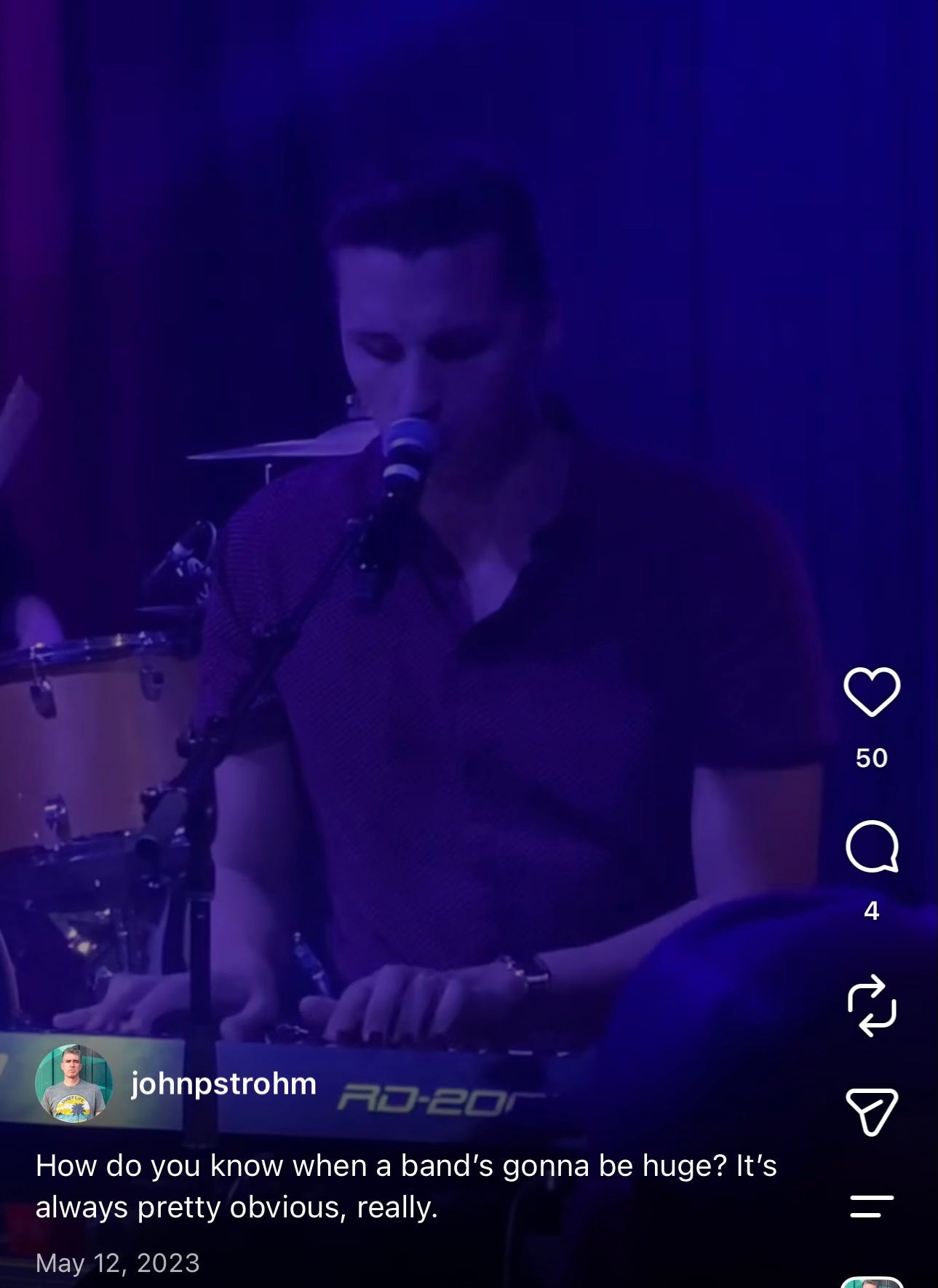
Back in 2023, I posted a clip on my personal Instagram (shared above) of the first time I saw the Strays live, at a small club in Georgia. I wrote “How do you know when a band’s gonna be huge? It’s always pretty obvious, really.” I’d worked with them for a few months at that point, but I was fully convinced even before their viral breakout a few months later that they’d get there. The roots were already in the ground. The clip showcases Brandon Coleman’s voice and presence, but that’s just part of it. There are many musical acts I’ve known over the years with immense talent who haven’t “made it.” I meant to suggest something else as well, an energy in that small but packed North Georgia roadhouse in early 2023.
Most of the people who attended that show lived more than an hour away from the off-season vacation town of McCaysville, Georgia. They came to the show as a destination event to see a favorite band, to connect with other fans, and to enjoy the catharsis of hearing the songs live they’ve been streaming and sharing for months. They came on the strength of a Facebook fan community of mostly middle-aged fans who had in some cases followed the group from their Gulf Coast origins.
Even though the band wasn’t big by any definition, they clearly had real fans. The energy of those fans was palpable in the room, and people knew the songs—even the ones that weren’t on Spotify or Apple Music. I didn’t yet fully understand what brought all those people together, but I could tell it was real and scalable. I’d already seen enough to feel like my post would age well. With thousands of small acts playing venues all over the world every night of the week, how do you spot the one that’s going to scale into arenas in a few short years? Evidence of a formative fan community is a strong indication.
Back to the album announcement show, the artist had around 20,000,000 streams on a self-released debut, and a robust social media following. How did he know he could do a successful ticketed show in Nashville based on those numbers? He didn’t. Putting a show on sale without ticketing history is always risky. Even though we had authentic data points, it’s hard to measure enthusiasm from consumption data. There’s no way to know exactly how many of those streaming listeners and social media followers will care enough to fill a room. But once he’s taken that step, he knows there’s a real audience for the music. That’s when it makes sense to commit, invest, and build.
The lesson isn’t to let up on the digital efforts at that point—the audience provides strong evidence those efforts have been effective. The lesson is that there’s a business. There’s been sufficient progress to begin spending time, effort, money, and resources on creating more real life fans across more markets. It’s real—it’s working. There are people who care enough to buy a ticket, attend the show, and leave with merchandise. The fans will carry the message. That’s all the encouragement I need to continue investing my time, resources, and attention into a project. That’s when they need—and can afford—my services as an attorney.
Artist development happens in stages. The earliest stages are incredibly frustrating. Lighting that initial spark is the hardest thing, and there isn’t much anyone can do to help. An artist that’s trying to get to 10,000 Instagram followers or 10,000 Spotify monthlies probably doesn’t need to spend a bunch of money on a lawyer. But once that choir shows up, once strangers in a strange town know all the words and want to sing them to your face, that’s when the opportunity becomes real. That’s when it gets fun. And that’s when you take steps to build a real business around the music.
"In Boston in the ‘80s you could pack a club with music scene insiders and fellow musicians. They came, but they didn’t react the way fan communities do now. They remained aloof, arms folded, avoiding the front of the stage, and rarely buying merch and never asking for an autograph or photo."
The aloofness, almost stoicism, of audiences at Chicago clubs like Lounge Ax and Cabaret Metro in the 80s/90s was palpable. I had buddies in regional bands that would remark how aloof people in Chicago were compared to folks in Milwaukee. Maybe it was certain clubs that bred that attitude? I dont know. Did you ever notice any regional differences, John?