
God Bless the Blake Babies
Humbly submitted for your re-consideration

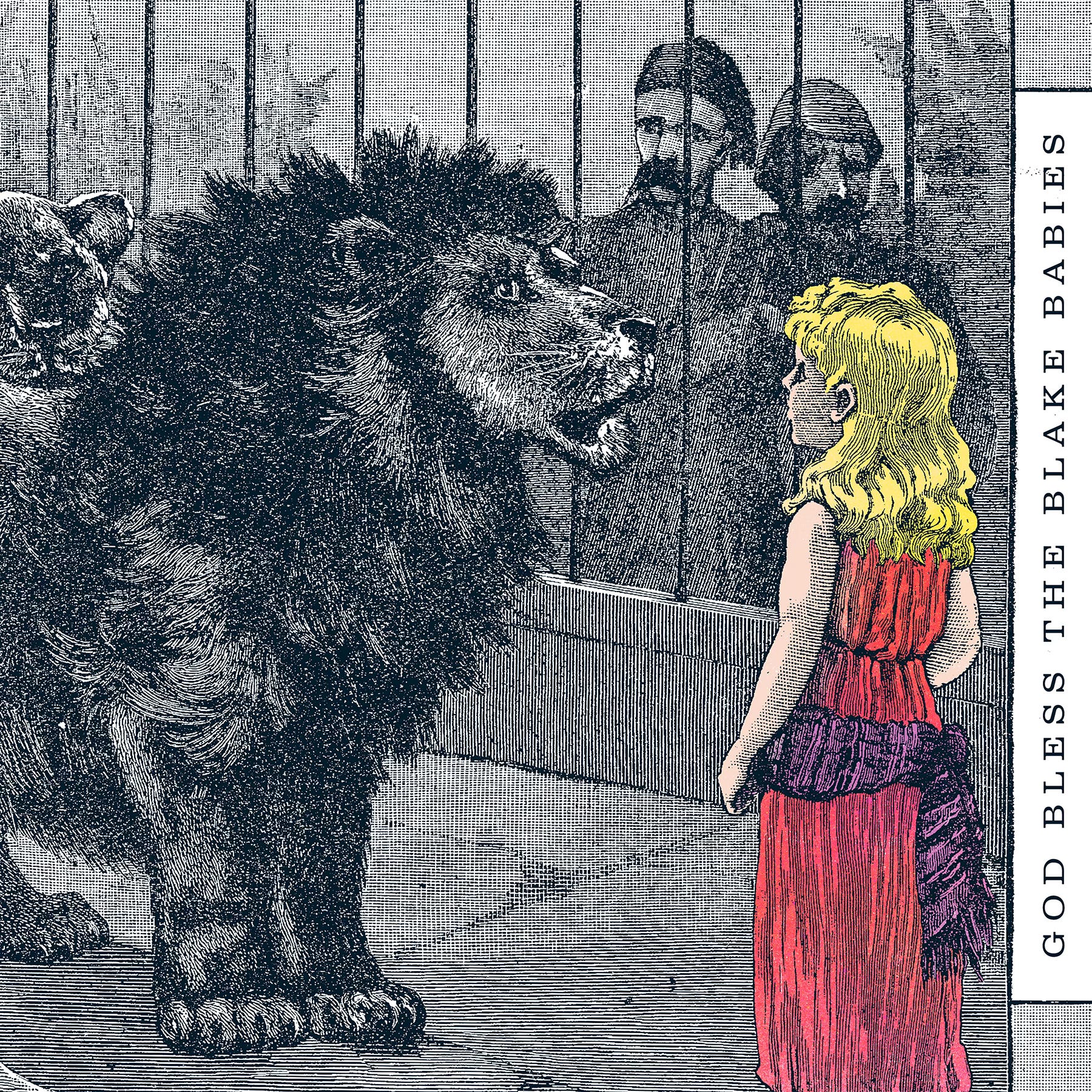
I’ve said it for years: God Bless the Blake Babies is the best Blake Babies album. I’ve seen flickers of support from our fans, but it’s clearly a minority opinion. By “best” I mean for my own personal enjoyment: it’s the only Blakes album I choose to listen to because it brings joy. Recently I had to listen front-to-back to approve a vinyl master, and it reminded me how fully realized, detailed, and delightful it is. I’ve listened multiple times since. I’m rediscovering it like a brand new find—just like I do with my favorite albums.
To be honest, I don’t feel that same joy when I listen to our other work. I feel vaguely anxious and disoriented. I’m transported back in time, and not necessarily in a good way. Those albums are a record of our dysfunction. I feel proud of the songs and guitar work, because I know how hard I worked—how hard we worked—to write those songs and make the recordings. I feel anxious because I felt anxious all the time back then. But by 1999—eight years after the band split up—I was done feeling anxious about music.
The truth is I had plenty of other things to be anxious about. When we made God Bless the Blake Babies, I was a 32-year-old undergrad in Birmingham, Alabama, about to get married, start a family, and begin my 1L year in law school. I had a new record out called Vestavia that people enjoyed, but it wasn’t setting me up for a continuing music career. It was time to move on from the idea I could make music for a living.
I wasn’t licking my wounds over my record failing to gain attention—I sort of expected it. I made the best record I could, but I knew it was a Hail Mary. I wanted a sign to know if I should continue or move on, and by then the message was clear. It’s exhausting to be a full-time musician. I was burned out. I wanted a different life so I set my ambitions aside and made up some new ambitions.
And just like that I went from full-time professional musician to hobbyist. I changed my mindset for self-protection. From then on, the question I ask myself when I have a music-making opportunity is quite simply: “Will it be fun?” For the past 25 years I haven’t agreed to do anything in music I didn’t expect to enjoy. That subtle shift revitalized me. The pressure was off and that enabled me to approach a project with a much more positive mindset. Let’s try this and see what happens…
In 1999, Juliana had a high-profile and—as ever—a prolific output. Blake Babies ended more or less amicably, but I hadn’t seen much of Juliana since our last tour together in 1992. I kept up with her manager, Gary Smith, who used to send me all her records. I always listened with great interest. Even if our personal friendship went to sleep for a few years, I’ve never stopped admiring Juliana’s songwriting. We learned together, and from the same incredible group of friends. I always feel connected to her music.
On a personal level, however, we didn’t have a relationship. The breakup took its toll.
We kept up with each other mostly through Freda. Freda and I ended our romantic relationship at the beginning of the 90s, but we remained friends, always in touch. Freda and Juliana developed an active post-band friendship, which made Freda our point of communication. Around the time I moved to Birmingham in 1998, Freda had an idea she shared with each of us.
She raised the prospect several times over the years and eventually got us talking. I don’t know if Juliana needed to be persuaded; I wasn’t in that conversation. I had some reservations founded in lingering hurt feelings from the breakup, but my curiosity eventually took over. I wanted to see what we could come up with together. After years of writing in solitude, I wanted to collaborate again. Could we still conjure the magic of our early 20s in our 30s?
We each started writing for the project on our own. It went down just like the old days, but remotely. I made simple video recordings of riffs and song structures for Juliana. She learned my songs, made some adjustments to suit her range, and wrote lyrics.1 That’s how a lot of our old songs came into existence. Out There, Lament, Star, A Million Years, and others. We wrote together, but separately. Juliana and I wrote a lot of songs together, but never once did we write together in the same room. I guess we’re both too awkward to be that open with each other. Whatever, it worked.
The material on God Bless is a few co-writes by Juliana and me and a couple songs from each of us individually. Freda—who hadn’t previously written on her own for the band—contributed two of the strongest songs on the record. Her contributions made it feel even more collaborative, a project of equals. Everybody wrote songs, everybody sang their songs. Juliana had an audience for her songs through her solo career—we no longer needed to be concerned about whether or not we had a leader. Juliana’s voice would be the center because she’s the best singer. We’d each made our own records and knew how to get what we wanted in the studio.
We met up in Bloomington, Indiana, to record. One of our longtime collaborators, Paul Mahern, produced the sessions at Echo Park, the studio where Freda and I had each made our albums. Gary Smith put up the money for the sessions. True to form, Gary thought big and assumed record labels would line up for an event record like a Blakes reunion. Between the three of us, we’d already released eighteen albums by then. We’d all learned to manage our own expectations and focus on the music.
We invited Evan Dando to try to recapture some of the magic of our brief time as a quartet. The lineup with Dando predated any success—we played to a lot of empty rooms. The music, however, was on point. We found our sound in that lineup. When Juliana took up bass, she consciously emulated Evan’s approach to the instrument—which largely explains why Juliana played bass on It’s a Shame About Ray. Regardless of the complexity of their personal relationship, Juliana and Evan have always deeply admired each other’s musicianship.
Evan arrived in town on the back end of a bender, so it took a day to get him to the studio. Once there, he brought some real magic to the project. I wish I had a track sheet to know exactly who played what, but Evan’s all over the record. He and I had a couple wild nights closing down the Bloomington bars, and some slow starts. But we easily found our old groove.
The album came out on Rounder Records’ Zoe Records imprint, Juliana’s label at the time. I wouldn’t have imagined at the time I’d end up president of the label over a decade later. The title of the album came from a magazine Gary showed that had the transcript of Bono giving a radio interview. When the DJ announced the last song as Blake Babies, a festive Bono exclaimed “God bless the Blake Babies!” By the way, it’s always been Blake Babies, not the Blake Babies. Sorry for the confusion the album title has caused.
I feel a little weird writing like this about an album I helped make. I feel some critical distance, however, because it seems like another lifetime. I’m grateful that Paul, Juliana, and Freda gave me such a generous canvas to play guitar. God Bless is definitely my best work as a guitarist.
I’m proud of the unique approach I took to accompanying Juliana’s voice on the early records—we put a lot of work into our early sound. Nevertheless, we’d each become far better musicians since then. For the first time we gave each other full creative range—in fact we all had full creative range, including Paul and Jake Smith, who played on Freda’s songs. When Gary Smith produced the band, he subtly exercised a great deal of control over the music by constantly reminding us we were making music for the masses and it had to be immaculate. Paul is also a perfectionist, and he would encourage us to turn in great performances. But he never second-guessed our creative choices. We made the record we wanted to make—each of us individually and together as a unit.
In fact, I have no idea who played what at times. I know Evan, Juliana, Jake, and I all played some bass parts. Juliana’s acoustic guitar parts are hard to tell from mine because we’re locked in. That’s the benefit of hundreds of shows. Freda became a much better drummer, but her feel is distinctive. The album doesn’t sound like Blake Babies in 1990, but it does feel like the same band. To me at least.
Since you’ve read this far, here’s a track-by-track rundown of my thoughts, memories, and favorite things about each track.
Disappear. I wrote the music to Disappear. Like the other co-writes on the album, I didn’t hear the lyrics until Juliana sang in the studio. This is a sub-genre of Juliana lyrics where she’s venting about a particular individual. I’m pretty sure I know who it is—the clues are there. Other examples of this are I’m Not Your Mother, Wipe It Up, Take Your Head Off My Shoulder, on and on.
The guitar sounds are right on point, warm and sparkly. Paul and I made a lot of records together, lots of guitar arrangements. By this time we had an intuitive workflow, a shorthand way of communicating. I could always tell from his reaction when I got it right. When I listen now it sounds like a J Mascis tribute, but I don’t think that’s intentional. I just love J’s playing and it’s easy to slip into tribute mode. I guess I’m right on the line with the solo, but it suits the song. Hats off to J and Dinosaur, a constant source of inspiration in our formative years.
Nothing Ever Happens. Freda wrote this one. She recorded it and put it out with her band Lola—all women from Bloomington—which seems not to exist on the Internet. I remember how much fun we had; in fact, you can hear how much fun we had. Who played the synth? I have no recollection, it could have been any of us. I managed to ape Robert Quine and Glen Campbell in back-to-back solos. I hear Jake Smith’s voice on the choruses, which makes me suspect he contributed far more than that. Most likely that’s him on bass.
It’s the “hit” on the album, featured in the remake of Freaky Friday. And yes it sounds like a summer pop song in a teenage movie. I suspect Paul is to blame for the weird radio pickup coming through the guitar amp we decided to keep that had me thinking my stereo was broken. That’s some Paul Mahern mischief if I’ve ever heard it. Sometimes we used to put things on records simply to confuse and confound—and ideally to make people think their record player was broken.
Baby Gets High. This is a Madder Rose song, written by Bille Cote. This track is so delicate and beautiful. I played all the guitar and I think I played bass. I’m doing my best Steve Cropper here, some really tasty moments.
That’s Evan’s first appearance on the album, singing the low harmony on the choruses. Their vocal blend is magical; you don’t hear so much harmony singing on the Lemonheads albums she’s on. I think I add my voice at the very end as a third part.
I hope Billy appreciates this cover—it’s a loving rendition. I looked for the Madder Rose version on Spotify and I couldn’t find it. I guess it wasn’t on one of their albums. I wonder how Juliana found the song.
Waiting for Heaven. Juliana wrote this one. The guitars are so locked in I can’t tell who played which acoustic part. The main one that counts the song in is Juliana. More gorgeous Dando harmonies; their voices together are so beautiful.
I listened to this a lot when we had the master, which I think we in the late fall. This song gives me a fall feeling, like frost in the air. It’s sad but not too sad, longing. I assume this would have ended up on one of Juliana’s albums if we hadn’t cut it. I don’t know if she wrote for the project or just brought in whatever songs she had finished.
It doesn’t matter—this is a perfect version of the song. The bridge is very Paisley Underground, like something off the Rainy Day album. I’ll guess it’s Paul on Mellotron.
Until I Almost Died. I wrote this riff and chords, Juliana wrote the evocative lyrics and melody. I wrote the song to be an uptempo pop rock song, like when the electric guitar comes in at the end. I remember being pleasantly surprised how well it worked, considering how different it is from what I imagined.
The best thing about this track is the piano, which I assume is played by Juliana. It changes the riff in a good way. I wrote it as a rock song, but it ended up somewhere else, somewhere better.
Picture Perfect. This one is unapologetically shoegaze. It’s a rewrite of a song titled Eleven from the Velo Deluxe album. I never liked the lyrics to that one, and it never seemed finished to me. I decided to rework it and re-write the words as a love song.
One thing I think is notable is how positive and hopeful the lyrics are from my and Freda’s songs compared to Juliana’s. Juliana’s songs are either forlorn or pissed off. Picture Perfect, like When I See His Face, is an expression of joy and light, excitement for what’s to come.
I’d like someone to cover this. Make it even more full-on shoegaze. Come on!
When I See His Face. Freda’s song and Freda’s lead vocal. I love hearing Freda sing. One of the most familiar voices of my life. I think this track is mostly Freda and her husband Jake Smith, who was Freda’s partner in The Mysteries of Life as well as a member of Antenna. I think some of the guitar playing towards the end is me, but then it might all be Jake. I have no memory of working on this one, which could mean I didn’t do anything.
The song is for her son Jonah before he was born. Jonah is in his early thirties!
What Did I Do. I didn’t remember doing the Frippertronics in the beginning. It is a beautiful beginning, which makes it a little jarring when she sings “such a beautiful beginning.”
This song is hard for me to listen to because the lyrics are so damn sad. I knew what Juliana was going through in her personal life, and I knew it was an authentic expression of romantic bewilderment and disappointment. It still hits me hard, but it’s also a gorgeous track.
Brain Damage. This is a Ben Lee song. I think Evan suggested the cover. Ben fans: did Ben ever cut this? Is this the first version of this?
Once again, you can tell we’re having a blast making it. Most of the tracks on the album are restrained—for this one we threw everything we had in there.
Civil War. Sometimes playing guitar on Juliana’s songs is like solving a puzzle. Sometimes there’s math. I think Juliana wrote this on bass and plays the bass part. I came up with all the guitar that frames the bass part. The bass really carries it, though.
This is a different gear for Blake Babies. We’re reaching for a level of gorgeousness we’d have shied away from in our first run. Freda is especially great at slower tempos like this.
Invisible World. This song probably would have fit well on one of my solo records. My favorite thing by far is Juliana’s harmony. The guitar solo is clearly influenced by David Gilmour, probably my biggest influence on lead guitar. I love that his solos are so singable. That’s something I strive for.
I’ll confess that I don’t love hearing my own voice. I find it a little jarring. I always used to worry that the songs I sang killed the vibe of the album. I’m proud of this song, but it’s a different feel. For any misgivings I have about the song being included here and standing out, I’ve had a few different people single Invisible World out as their favorite track.
I actually wrote an earlier version of this song as a project for my English class. I had a cool professor who became a friend, Danny Gamble, and he let me do something very unconventional. The original lyrics were based on Cotton Mather’s essay from the time of the Salem Witch Trials titled The Invisible World. Needless to say, I didn’t keep much from the original lyrics. Maybe I should have.
On. This is a recycled riff I wrote for a Velo Deluxe song. I don’t know why I broke it down for parts. Maybe I ran out of songs? It’s good to bookend the album with “angry Jules.” Neil and Jennifer - that’s a reference to Royal Trux for the GenX culture fanatics. Obviously I’m having a lot of fun playing the guitar here. Makes me want to wake up the neighbors.
I love that an album with so much restraint overall eventually descends into chaos. Anyone who saw us live in our prime knows it all eventually ends up in a swirl of noise. We never wanted to be a pop group.
IN CONCLUSION
When we made Earwig and Sunburn in the late 80s and early 90s, we were striving for greatness. We were out of our depth, playing beyond our abilities, trying to invent a new language out of whole cloth. God Bless is also ambitious, but it’s a different kind of ambition. Knowing it was a one and done proposition, that we’d probably never make another album together, we set out simply to make the best record we could make at the time with our limited time and budget. Personally, I wanted to go out on a strong note. I wanted to make something we could feel proud of.
The reaction at the time was more or less non-existent. We were at once too early and too late with this album. Too late because we broke up and all our momentum became Juliana’s momentum. Anybody hoping for a Blakes follow-up had moved on after nearly a decade. But then we were too early because not enough time had passed for fans to feel any nostalgia. Juliana retained most of the Blake Babies audience and grew from there. Many of her fans weren’t even aware of those records. She had little to gain in looking backwards, which is something she almost never does. It wasn’t a career move for anyone, making this record. It’s just something we all wanted to do.
We played a New Year’s show in 1999 (Y2K) and another the following summer on the same night as my wedding in Birmingham. We went on a somewhat ill-advised summer tour after the album came out in 2001, but the shows were fun and reasonably well-attended. I started law school a few weeks after the last date, and I didn’t look back…until now, almost 25 years later.
One of the coolest things about God Bless—which sets it apart from our earlier albums—is to my ear it doesn’t sound dated. An indie band of twenty year olds could make this exact album today and nobody would bat an eye. It sounds classic and modern. the songs hold up. I’m writing this because it should be a big part of our legacy rather than some afterthought. In creative not commercial terms, it’s a victory lap—a celebration of a musical collaboration we finally had the chops and creative ambition to fully inhabit. It’s hereby respectfully and humbly submitted for your reappraisal.
HERE’S THE VINYL PRESALE LINK!!!
https://www.alr-music.com/collections/vinyl/products/god-bless-the-blake-babies
I didn’t think about this much when we wrote together, but it’s a cool coincidence that our voices are an octave apart. When I write for my own range, it works in her octave range.
“God Bless” rocks. Hey - Lemonheads on Fallon Tuesday night was killer shit!
Loved reading all these cool details (as always!). Thanks!
This album is sooo good…still gets consistent plays here.❤️ gonna put it on right now actually🙌🏻