
Welcome to the Machine
Seeing around the corners at CMA Fest, looking for the Next One

I didn’t finish an essay last week because I was slammed at work. Sorry. I know that nobody is requiring—or necessarily expecting—me to write something every single week. This is the pressure I put on myself out of my gratitude for even having any audience for my writing. I don’t say it enough: thank you for your support, encouragement, and conversation.
I felt like I was in the eye of a storm this week because in addition to the usual deal flow, Zoom calls, and whatnot, I had a brand new country music client breaking out on TikTok come to Nashville for the first time for label, publisher, and management meetings. That’s usually fun, but also time consuming and stressful. And it happened during CMA Fest week, which is one of the busiest weeks in the country music business (second only perhaps to CMA Award week in the fall).
The official CMA Fest is Thursday through Sunday; however, just like the awards, it’s becoming a full week of festival-related stuff. It was a strategic move to bring my client to town during the festival, because everyone’s here this week. Everyone’s out day and night, and everyone’s talking about what’s next, what’s coming up. It’s hard to spin up a buzz; but if something catches on it’ll spread like wildfire.
Industry buzz is always an aspect of CMA Fest—whether or not the act even plays any shows. If the CMA Awards are about celebrating success, the festival is about what’s next—whether you’re a label, manager, digital marketer, radio programmer, or just a fan. After all, they used to call it “Fan Fair”—while it’s a big week for the industry, it’s supposed to be about giving the fans access to their favorite artists, and a chance to become fans of new acts.
The bigger stages are specifically for the fans, featuring a range of established artists from journeymen to superstars. The biggest stage—the nightly bill in 70,000 capacity Nissan Stadium, where the Titans play—is a celebration of the biggest acts of the moment. The smaller stages, free of charge and scattered around near Lower Broadway, are for the hopefuls, aspirants, the up-and-comers. Occasionally you see older former stars building it back, but mostly it’s a lot of developing artists you’ve never heard of.
When I say “developing artist,” I mean an artist that isn’t yet a headliner but strives to be one. It might mean a high school kid singing into his phone, or a signed act with a big marketing budget opening first of three on an arena bill. Often the artists playing the smaller stages have management, an agent, a label, a publisher, and for that matter a lawyer. I’m not out there stalking the stages, because by the time an act is on the festival at all, they’ve likely already retained legal counsel. If they’re smart and well advised, getting a lawyer is one of the first business moves and artist will make.
When I first moved to Nashville fifteen years ago and for my first five or six years, I didn’t really ever attend CMA Fest. I wanted to. My firm always had clients playing, often on the stadium bill. I did some work for those clients, but I never felt especially connected to the business teams. My own clientele was far more likely to play Bonnaroo, which used to directly conflict with CMA Fest. We had to choose one or the other. I went to Bonnaroo for the entire weekend because that’s where my clients were far more likely to play, and because we’d turned it into a family trip year after year. My kids had no interest in country music or CMA Fest. Bonnaroo had their favorite pop and hip-hop acts.1
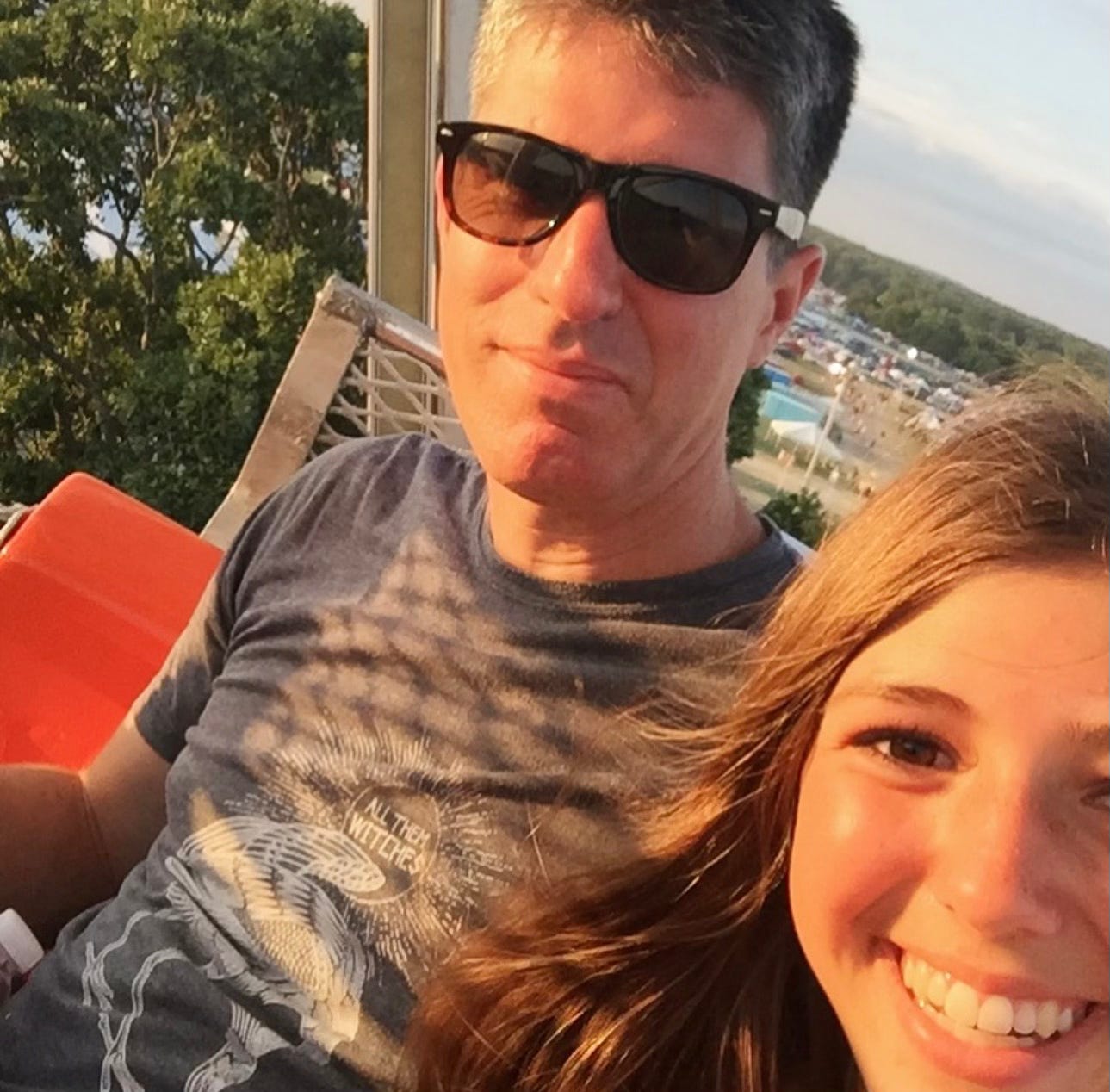
I remember the first time I went to the daytime stages was 2017, because I was working with a client who had a lunchtime showcase on a small stage in front of the Hilton. My family was headed back to The Farm, as they say, for our second Bonnaroo day. The CMA showcase was early in the day, so I had time to first head downtown and get back for our scheduled departure. I invited my daughters Anna (14) and Sophie (9) to come with me. I promised them ice cream, which is the real reason they agreed to join.
The client was Morgan Wallen, then a newly signed young artist with a label, publisher, and management deals in place. I didn’t get to know Morgan all that well in our brief time working on the deals, but we met a few times and spoke on the phone numerous times to discuss his project. He wanted to understand his business, which is always a good sign for a new artist. I found him to be polite, ambitious, charismatic and super talented.
I also thought of Morgan as substantially different from other country artists I worked with at the time, such as Sturgill Simpson. Although Sturgill was beginning to post mainstream numbers for ticket and record sales, he wasn’t part of the same industry in my view. He was completely outside the Music Row machine—later that fall Sturgill held his famous free speech protest outside the Bridgestone Arena during the CMA Awards. He wasn’t playing the game, he clearly had his own agenda and he seemed willing to burn it all to the ground. Morgan seemed—at least at the time—ready, willing, and able to play the game. I’ll admit I was pleasantly surprised when Morgan covered Jason Isbell’s “Cover Me Up” in 2019. I’d have been shocked if he covered that song in 2017, but by 2019 it felt like that gap might be closing a little.
I believed Morgan had a real shot, and it was my biggest goal at the time to work with developing acts that would break big. That Saturday he’d recently signed to the brand new, well funded and resourced label Big Loud, an offshoot of a publisher and production company whose biggest success was Florida Georgia Line. They’d released his first official single to radio—which wasn’t exactly my taste at the time, but it sounded like a hit to my ear. The Way I Talk stalled around #30 on the Billboard country airplay chart. His success wasn’t assured, and there wasn’t much outside evidence yet that he’d get there.
I wasn’t counting heads, but I’d guess there were about 20 people there to see him on purpose. He had some family, some business people, possibly a few actual fans. He had so few songs with his band that he filled out his half-hour set with a ‘90s alternative rock medley. It wasn’t great, but you could see the effort and the potential. I was pulling for him and I wanted to make sure he knew I came to see him play.2
After the set, I explained to Anna and Sophie that I was there for work and that I wanted to go say hello. I encouraged them to come along for the brief visit, but they chose to sit and wait for their promised ice cream cone. They weren’t interested in country music, and it never crossed either of their minds that they may someday want a record of their meeting. I didn’t give it much thought, either. It wasn’t for them, and naturally I didn’t take it personally.
Artist development is all about trying to get people to give a shit. Like the vast majority of CMA Fest attendees, my kids didn’t give a shit—yet. I couldn’t expect them to share my excitement and passion for an artist that hadn’t been validated by the media. They had their own taste, which was informed by their own sources. It wasn’t their thing.
Today, Sophie is head over heels for Morgan’s music. Like so many suburban teenagers, she pivoted from mainstream pop and rap to Country a few years later. Now she considers the evening bill of CMA Fest her birthright, a celebration of her favorite music with her best friends. Notably, Sophie hasn’t bugged me for Bonnaroo tickets this year. She’s apparently moved on.
Sophie still brings that day up from time to time, asking me how I could have failed so spectacularly to do the very minimum of getting a photo of her with Morgan to show her friends. Believe me, I offered and cajoled. I’m sure Morgan would’ve been gracious. Nevertheless, my daughters were like most of the music fans attending the festival: excited about their favorite acts (which happened to be at Bonnaroo), and completely indifferent to anything in the “developing” category. It wasn’t the only time they refused to pose for a photo with a future superstar. Even though I’ve worked in artist development for decades, “dad’s work people” and “dad’s weird friends” were never of any particular interest—even if I reminded them they might someday become famous. And, to be fair, the vast majority of my clients didn’t become superstars. Several, however, did become household names; and naturally those are the ones they focus on.
Although my kids have a better understanding of what I do today than they did in 2017, I don’t think it would be much different today. They wouldn’t take my word for it if I told them a client was going to be huge, but I doubt that’s how I described Morgan. I wasn’t at all certain that Morgan would even get his shot. In another era, he might not have broken through at all. Conventional Music Row wisdom at the time was that a newly signed artist got two shots at radio before the label would cut their losses. I was very aware of this benchmark—that’s why I probably wouldn’t have sold it as “get your picture with the next superstar of country music.”
I remember discussing it with then-manager and label head Seth England, who assured me they had a plan and they were in it for the long-haul. He told me about their next single, “Up Down,” which would feature FGL. Seth predicted it would go to number one, as it did in 2018. I was reassured by his confidence, but I didn’t necessarily believe what he was telling me.
Morgan’s career is a good illustration of how the country business has changed in a variety of ways. The reason labels would cut bait after two singles is radio promotion is incredibly expensive. Launching a new artist at country radio was a six-figure spend without exception, and working a song to number one could cost $1,000,000. An act with two failed singles would put the label half a million in the hole, and there would have to be something unusual going on for a label to keep digging a hole like that.
England recently sat for an interview with Kristin Robinson on Billboard’s “On The Record” podcast. He discussed Big Loud’s early embrace of on-demand streaming, and his attention to an emerging Spotify data story on Morgan. His confidence wasn’t just belief in Morgan’s talent or magical thinking—it was based on consumption data. I don’t mean to suggest major labels weren’t looking at streaming data in 2017, but radio was still driving the conversation. Big Loud and a few other data-focused companies recognized they could see the future in data, and that streaming and social media were the key to reaching a younger, more diverse audience. Morgan is one of the early beneficiaries of massive streaming success leading to radio, ticket sales, merchandise, and all the usual trappings of success.
Today, country music is bigger than ever, and it’s a much bigger tent. Developing acts such as the client I had in town this week have far more difficult (but in many ways more exciting) choices to make, because “indie” options are both viable and a source of leverage for anyone with a real audience. Labels have fundamentally changed, as their parent companies have developed their independent distribution with the knowledge that not every act that can sign a record deal will end up signing.
Artist with label opportunities have to navigate the question of whether a label deal is a fair tradeoff. They give up back-end value, autonomy, and possibly ownership for investment and resources. The difference recently is that the resources are mostly available on the open market if you now where to look, and there’s plenty of available capital outside the record companies once there’s a little momentum.
A defining characteristic of all the artists I work with is having confidence in the value and integrity of their own creative work. When I’m participating in these conversations for my client, I considering their goals, but also their creative sensitivities. Plenty of people in both the independent and major label sectors have demonstrated to me that they are real artist advocates who will work hard to protect the artist’s vision. That’s the key, but as everyone knows if you sign with a major, people might not be around for long. That’s why management choices are at least as important.
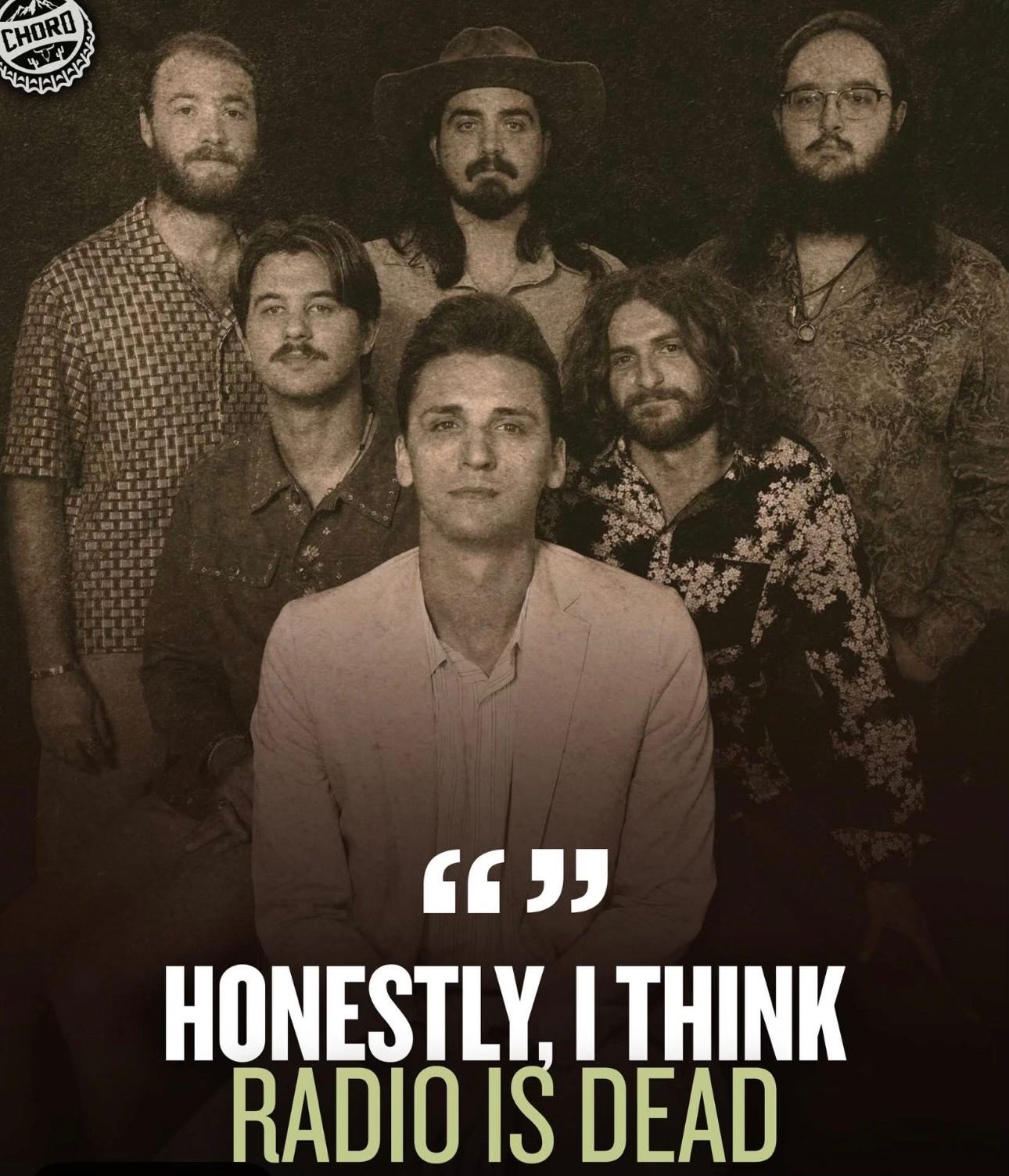
Many of the biggest acts at this year’s festival—the main stage acts—broke out on social media before they had any radio support. That’s absolutely true for Ella Langley, the biggest breakout this year. It’s also true for The Red Clay Strays, which I’ve watched develop up close as their legal rep for the past few years. The Strays recently walked back a pull quote from a recent Billboard feature stating that radio is dead. Bassist Andy Bishop was saying something more nuanced, which is that they didn’t need radio to reach a massive audience. There’s an active argument about the importance of radio, but there’s no denying that it’s no longer the only gateway to success.
My client will have options, and the choices he makes probably won’t determine whether or not he’s successful. If an artist is in the same mindset as Morgan was in 2017, they’ll sign a deal if they can so that they have the most powerful resources and investment in blowing up a huge career. If they’re many of my clients circa 2017, they’ll stay indie as long as possible, which is likely forever. Most are in the middle, open to success but anxious about losing creative agency.
I’ve worked more closely with Big Loud in recent years, and I’ll admit that I didn’t really understand what set them apart back then. I rate Big Loud at least as favorably as certain Nashville major labels because they are future-focused, and they’re doing everything they can to see around corners. Maybe it’s because some of the architects of the company came from the rock business, specifically Nickelback. Love them or hate them, you can’t deny that Nickelback built an incredible business on real artist development.
Label decisions these days are about access to resources. We’re also betting on the future, because we don’t know how the business will change in coming years. I hope in ten years there’s still a reason to have CMA Fest. I hope the country genre continues to grow and evolved, and I hope that people still want a chance to meet their heroes. If there is, I know there will be a buzz factory and a business community looking for the next one.
The kids’ priorities in 2017 were Lorde, Chance the Rapper, The Weeknd, and Travis Scott.
Please don’t give me a hard time about how you may feel about Morgan and his more recent behavior. My experiences working with him were very positive, and I continue to admire his work and talent. Since I left law practice to join Concord a few months later, I wasn’t ever part of his success, just the buildup. But it’s something I was genuinely excited about at the time.
Julianne Ankley was hiding in plain sight at CMA Fest for years. She is really stunning to see perform in person.
India Ramey and Kevin Carducci are on my list for everyone to watch in country. India is goth country with a brilliant new album and Kevin is the heir to the Buck Owens/Dwight Bakersfield country sound.